Instructional Shifts That Stick
A Northville Impact Story
How a middle school in Northville Public Schools, Michigan ignited engagement with Curipod — sparking student voice, creative expression, and a renewed love for teaching.
Supporting Good Teaching
When Jen Lawson first introduced Curipod to her district, it wasn't just about trying a new edtech tool. For the 25-year educator and Northville's Instructional Technology Integration Coordinator, it was about supporting good teaching—making it easier to plan, deliver, and sustain lessons that spark connection and curiosity.
Northville has used Curipod to bring more energy into classrooms. For teachers like Amy Soukup, an English and Social Studies teacher at Meads Mill Middle School, it quickly became a go-to tool for driving engagement, building student confidence, and igniting her own excitement for teaching.
“They come in excited. They see Curipod on the screen and ask, ‘Are we doing Curipod?’ If I say no, I get a collective, ‘Aw man!’
— Amy Soukup, ELA & Social Studies Teacher

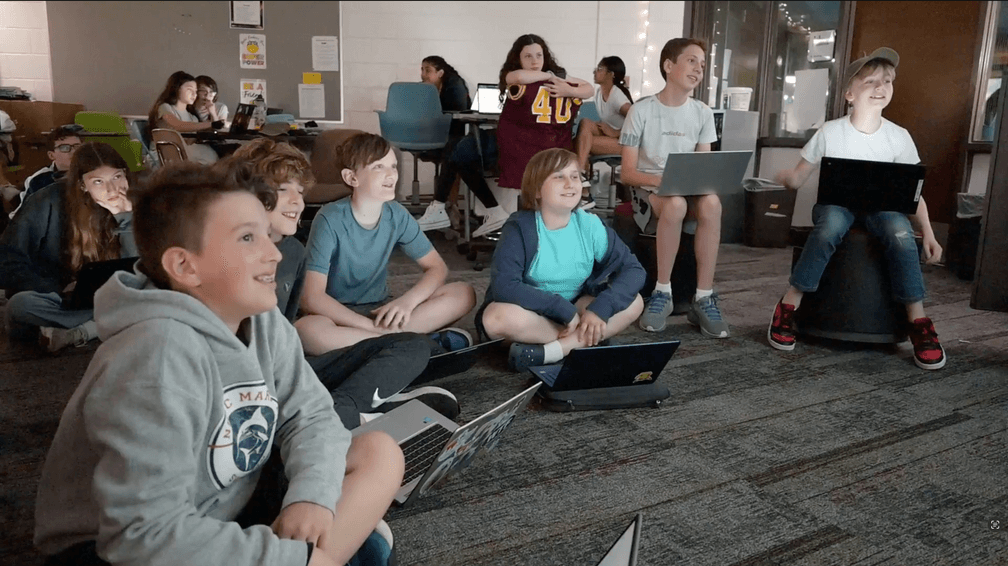
A Curipod lesson in action at Meads Mill
The Northville Team
The Shift Was Immediate
Amy didn't begin using Curipod until May. But within weeks, her classroom looked—and sounded—very different. The shift was especially noticeable in students who rarely participated—those who hadn't responded to small group work, individual check-ins, or creative incentives.
Student Voice Unlocked
“That was my answer,” a student beamed after seeing her response projected—something she never would have shared aloud before.
Quiet Students Thriving
One student, previously disengaged and quiet, now strives for the number one spot each day—raising hands, typing thoughtful responses, and competing for top-voted answers.
Creative Expression
Students laughed, debated, drew, reflected, and moved—engaging in various learning modalities. The energy in the room changed who felt empowered to speak up and how they did so.
Sustained Connection
For Amy, the energy didn't feel like a one-off. It felt like sustained connection—a catalyst for student voice, creative expression, and social interaction.
“A quiet classroom doesn't necessarily mean it's a learning classroom. With Curipod, I've learned that louder sometimes means more learning.
— Amy Soukup, ELA & Social Studies Teacher

Less Exhaustion, More Creativity
Curipod wasn't developed in isolation. It's shaped through ongoing collaboration with educators—something Amy and Jen noticed right away.
For Amy, planning lessons no longer meant spending hours trying to come up with new ways to keep students engaged. From vocabulary practice to test prep, Curipod helped her streamline the process—without sacrificing rigor or creativity.
By removing some of the mental load, Curipod gave Amy more space to focus on what matters most: being present, energized, and connected with her students.
“I just type in the standards and Curipod puts it all together. There's still my thought and ideas behind it but without the exhausting process.
— Amy Soukup, ELA & Social Studies Teacher
From One Classroom to the Whole District
What began as a short-term experiment in one classroom has grown into something larger for Northville. With tools that support real-time feedback, whole-class engagement, and creative freedom, teachers like Amy are discovering a new way to approach instruction.
“It just puts it all together and adds some creativity to it. That takes away your exhaustion. Teaching is already mentally exhausting. This gives you more of your life back.
— Amy Soukup, ELA & Social Studies Teacher
Students at Meads Mill Middle School
Why It Matters
In Amy's classroom, the change is visible—and audible. Laughter. Reflection. Debates. Applause. Students leaning in, not tuning out. This is the kind of change that happens when teachers are supported, students are heard, and classrooms come alive.
Curipod in action
Focused learning
Students leaning in
Curipod doesn't just help you teach better. It makes you feel better.
— Amy Soukup, ELA & Social Studies Teacher